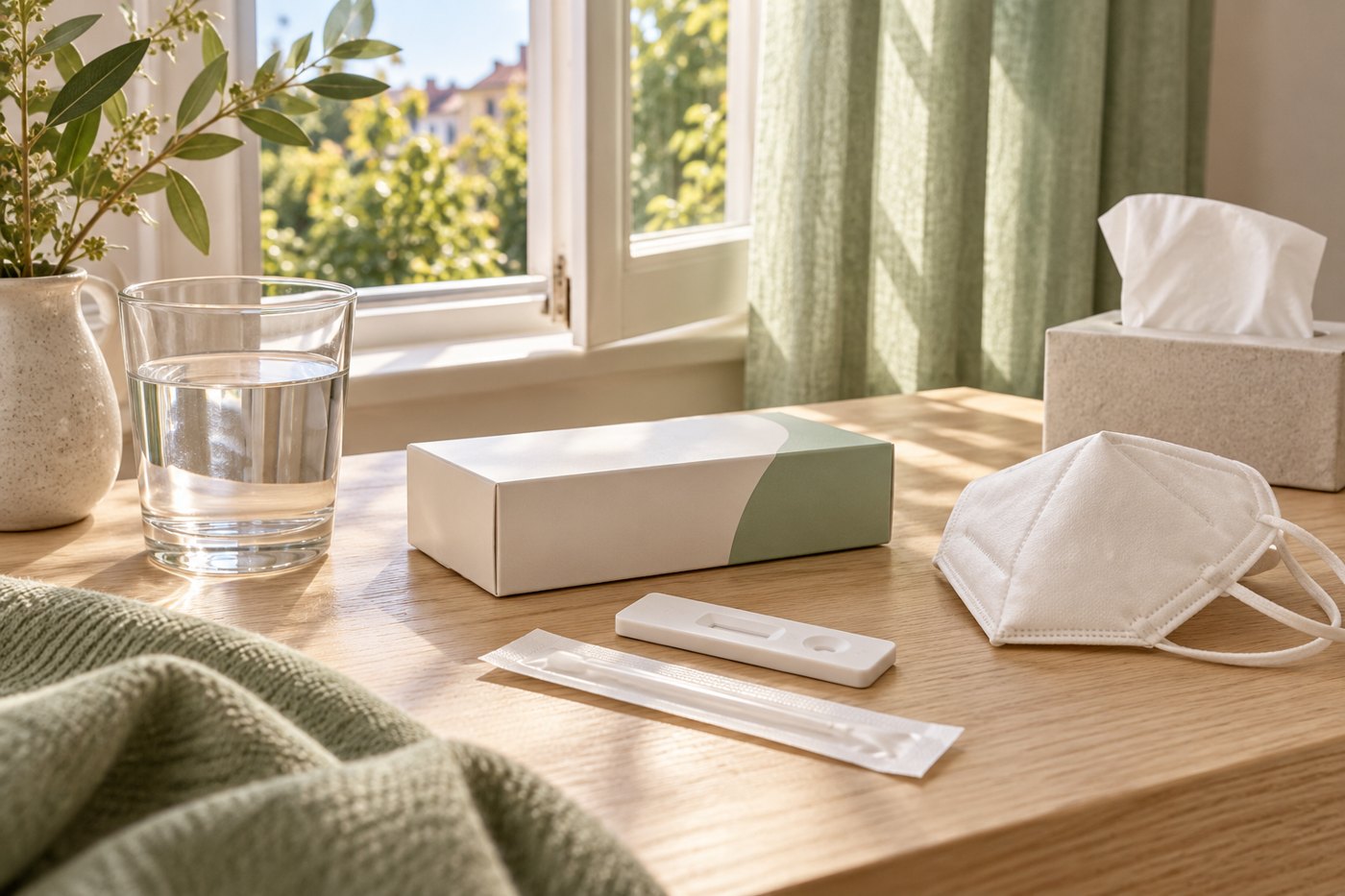
 Seasonal prevention · Q&A guide
How can you lower your COVID-19 risk before flu season?
Use layered prevention: review immunizations with your clinician, improve indoor air, practice hygiene and consider additional precautions when exposure or personal risk is higher. No single step removes all risk.
Read the guide ↗Seasonal prevention · Q&A guideCOVID-19, flu or RSV: can symptoms tell you which one?
Symptoms can overlap. A symptom checklist alone cannot reliably identify the virus; testing and clinical context can help guide next steps.
Read the guide ↗Seasonal prevention · Q&A guideHow do you use a home COVID-19 test correctly?
Follow the instructions for your exact test, including sample collection, timing and what to do after a negative result. Products can differ.
Read the guide ↗Seasonal prevention · Q&A guideWhen can a mask add useful protection?
A well-fitting mask can be an additional respiratory precaution, particularly in crowded indoor settings or when you or people around you have higher risk. Fit and consistent use matter.
Read the guide ↗Seasonal prevention · Q&A guideHow can you improve indoor air for winter gatherings?
Bring in cleaner outdoor air when appropriate, improve ventilation and consider suitable air filtration. Cleaner air is one part of reducing respiratory exposure indoors.
Read the guide ↗Seasonal prevention · Q&A guideWhat should older adults ask about seasonal vaccines?
Ask which flu, COVID-19 and RSV recommendations apply to your age, health history and prior doses. These are individual decisions informed by current guidance.
Read the guide ↗Seasonal prevention · Q&A guideWhat should you do when respiratory symptoms start?
Stay away from others when sick and check current guidance for returning to normal activities. If you are at higher risk, contact a clinician promptly about testing and treatment options.
Read the guide ↗Seasonal prevention · Q&A guide7 useful items for a winter respiratory health kit
Prepare a small kit around practical needs: testing, communication, hygiene and comfort. The kit should support a care plan rather than encourage self-treatment with unfamiliar products.
Read the guide ↗