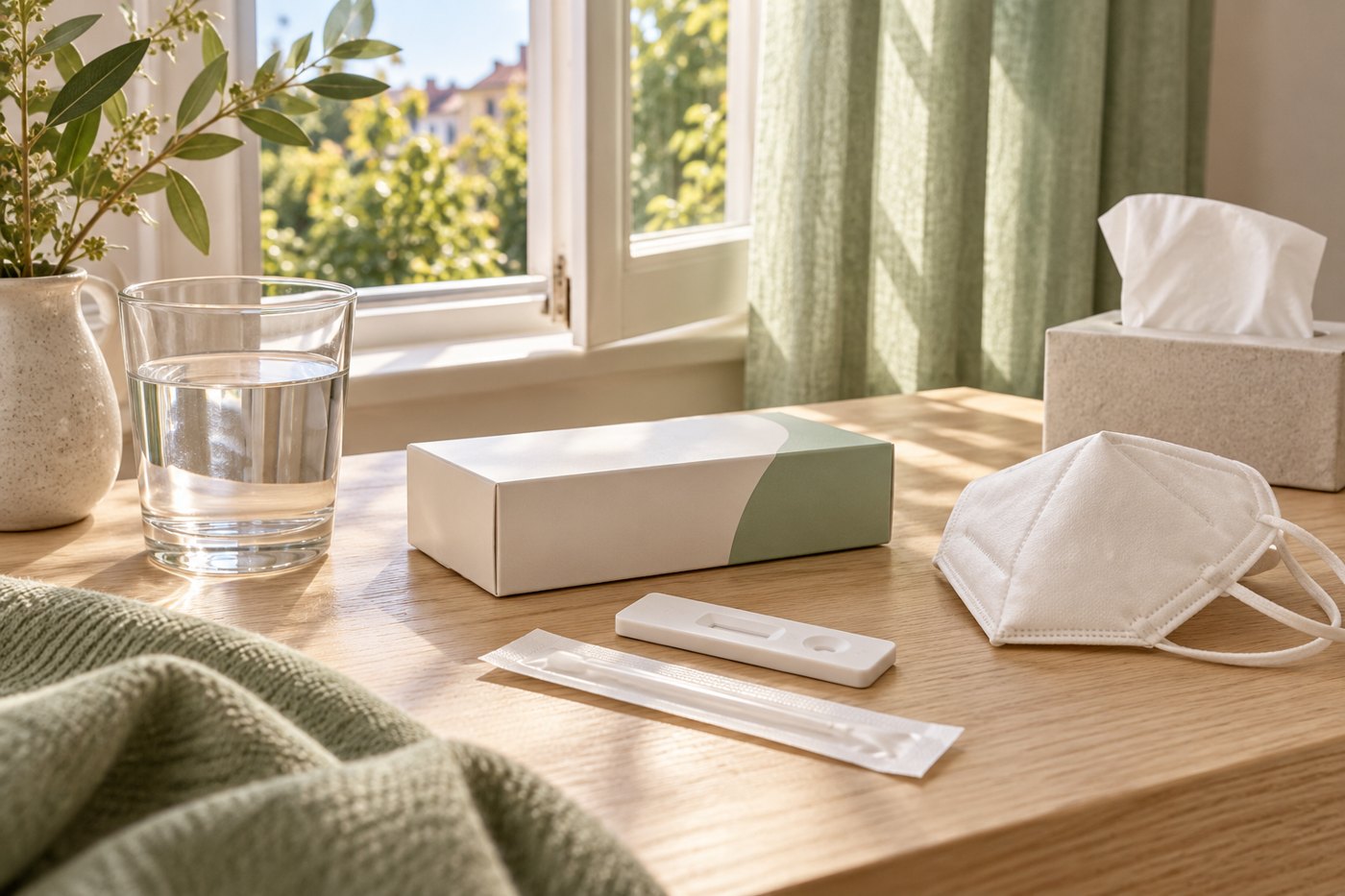
AI-generated editorial illustration. Illustrative only; not a patient, product endorsement or clinical result.
THE SHORT ANSWER
Stay away from others when sick and check current guidance for returning to normal activities. If you are at higher risk, contact a clinician promptly about testing and treatment options.
What is useful to understand?
Keep a brief record of symptoms, start time, temperature if measured and relevant exposures. This can make a call to your clinic more useful. Worsening breathing, chest pain, confusion or other severe symptoms need urgent assessment rather than an online search.
What can you ask or do next?
- Reduce contact with others.
- Read current CDC precautions.
- Contact your clinician early if you are high risk.
- Use urgent or emergency care for severe symptoms.
One more question
Should I wait for a positive test before asking for help?
No. Ask promptly if you are high risk or symptoms are concerning.
Where can you check the source?
Read the reference at cdc.gov ↗
Reference checked during preparation on October 20, 2026. Guidance may change. A source link does not mean the source reviewed or endorsed this article.
General education, not an individual diagnosis or treatment plan. For severe or rapidly worsening symptoms, seek urgent medical help. No clinician review is claimed for this content.
Seasonal preventionHow can you lower your COVID-19 risk before flu season?
Seasonal preventionCOVID-19, flu or RSV: can symptoms tell you which one?
Seasonal preventionHow do you use a home COVID-19 test correctly?