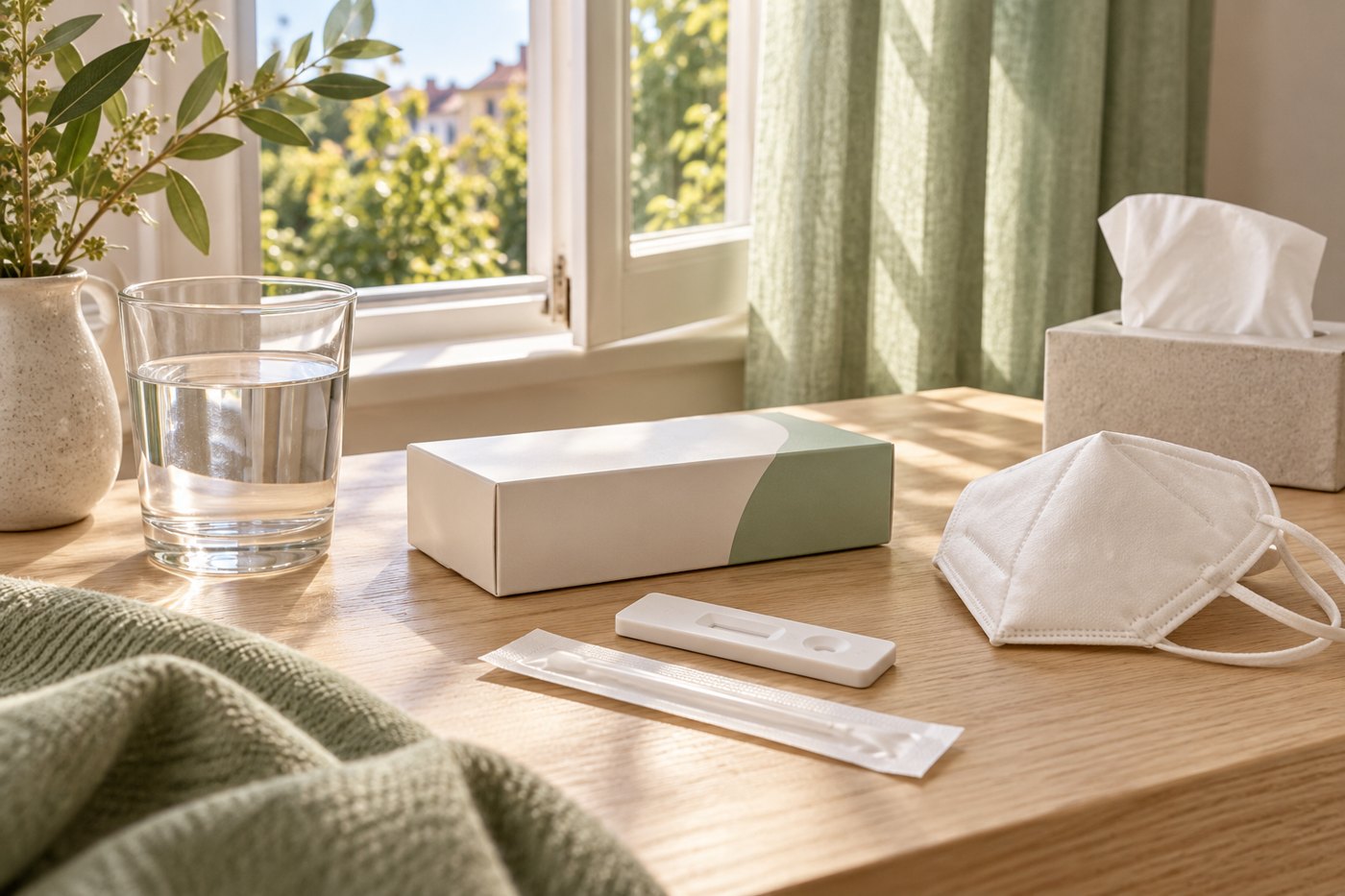
AI-generated editorial illustration. Illustrative only; not a patient, product endorsement or clinical result.
THE SHORT ANSWER
Prepare a small kit around practical needs: testing, communication, hygiene and comfort. The kit should support a care plan rather than encourage self-treatment with unfamiliar products.
What is useful to understand?
Check instructions and expiration information before illness starts. Keep medicines in their original packaging and review over-the-counter choices with a pharmacist if you take prescriptions. No shopping list can replace a plan for when to call a clinician.
What can you ask or do next?
- Tests appropriate to your care plan.
- A well-fitting mask.
- Tissues.
- Soap or suitable hand sanitizer.
- A thermometer you know how to use.
- A current medication list.
- Your clinic contact and after-hours instructions.
One more question
Should I stock antibiotics for viral illness?
Do not use antibiotics without a clinician-directed reason and prescription.
Where can you check the source?
Read the reference at cdc.gov ↗
Reference checked during preparation on October 20, 2026. Guidance may change. A source link does not mean the source reviewed or endorsed this article.
General education, not an individual diagnosis or treatment plan. For severe or rapidly worsening symptoms, seek urgent medical help. No clinician review is claimed for this content.
Seasonal preventionHow can you lower your COVID-19 risk before flu season?
Seasonal preventionCOVID-19, flu or RSV: can symptoms tell you which one?
Seasonal preventionHow do you use a home COVID-19 test correctly?